


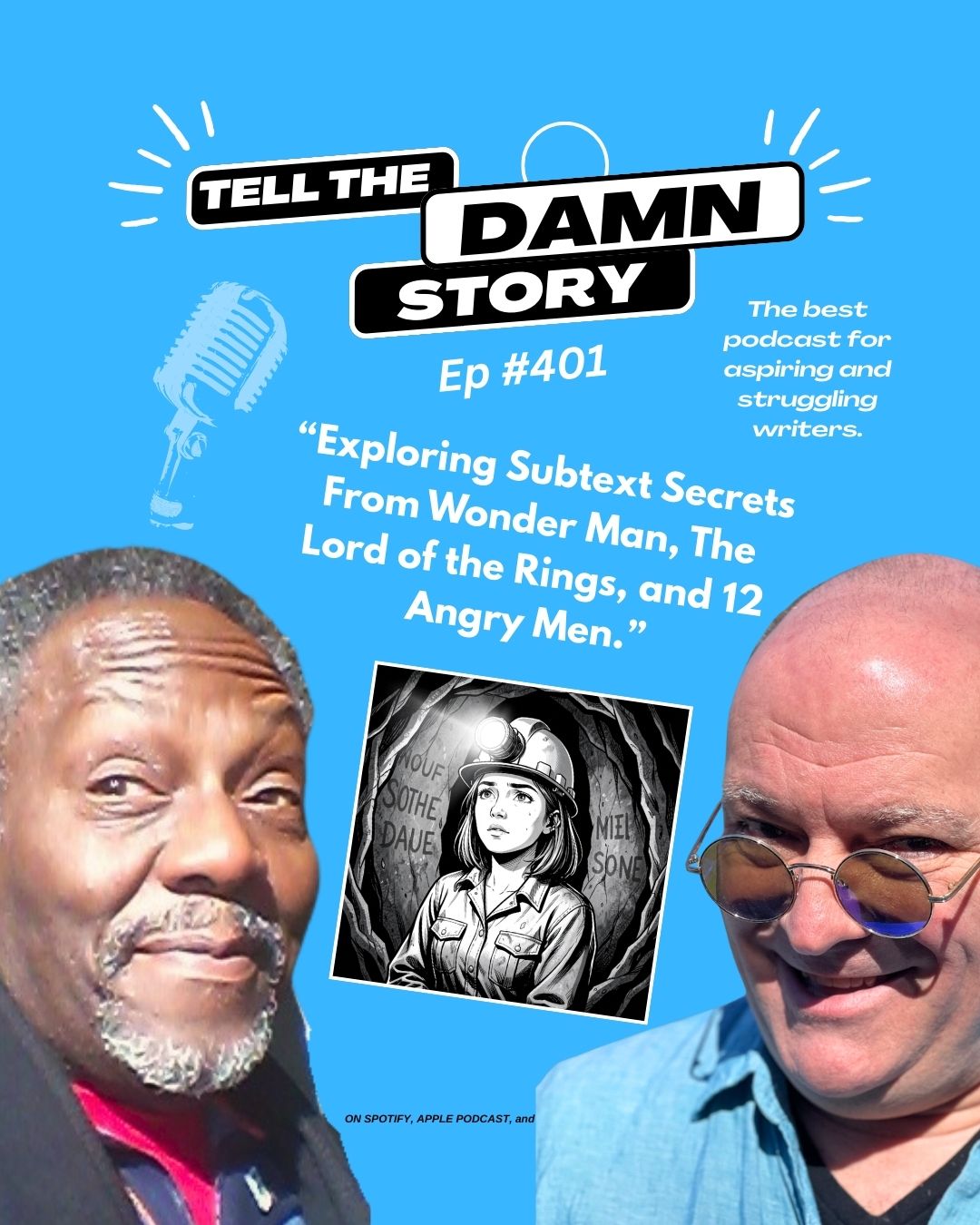
TTDS #401: "Subtext Secrets from Wonder Man, Lord of the Rings, and 12 Angry Men"
by AlexWhat Your Story Is Really About
Subtext Lessons from Wonder Man, The Lord of the Rings, and 12 Angry Men
Writers often obsess over plot.
Who did what.
When it happened.
How the climax lands.
But when a story feels hollow — when characters seem thin or moments don’t resonate — the problem usually isn’t the plot.
It’s the absence of subtext.
Plot is what happens.
Subtext is what’s happening underneath.
In Episode 401 of Tell The Damn Story, we explored how subtext works by examining three very different stories.
1️⃣ Wonder Man — Identity Under Pressure
On the surface, Wonder Man is a superhero origin story. A man discovers extraordinary abilities and steps into something bigger than himself.
But beneath that?
The story explores:
The pressure of hiding who you are
The cost of trying to fit into systems that don’t understand you
The metaphor of being “different” in a world that demands conformity
The value of friendship
The struggle to stop getting in your own way
The powers are the plot.
The identity struggle is the subtext.
2️⃣ The Lord of the Rings — More Than a Fantasy Quest
Surface story:
A group sets out to destroy an evil ring and save the world.
Subtext:
Even the smallest among us can shape history
Prejudice collapses in the face of shared danger
Addiction corrupts slowly and completely
True leadership requires humility
We must accept what we’re called to do
Frodo’s journey isn’t just about a ring.
It’s about burden.
Aragorn’s story isn’t just about a crown.
It’s about stepping into destiny despite shame.
The dragons and swords are the spectacle.
The human condition is the point.
3️⃣ 12 Angry Men — The Baggage We Bring
Surface story:
Twelve jurors must decide the fate of a teenage boy accused of murder.
But the real story?
It’s about bias.
Class.
Ego.
Impatience.
Personal wounds.
Each juror brings his own history into that room. The tension isn’t just about the evidence — it’s about what each man believes before the evidence is even discussed.
The verdict matters.
But the deeper story asks:
Are we capable of examining our own assumptions?
That’s subtext.
So How Do You Write Subtext?
Here’s the practical advice we offered:
1️⃣ Don’t Force It in Draft One
Just tell the story. Let it be messy. Let it breathe. Discover what it’s about after you’ve written it.
2️⃣ Embrace the Rewrite
Subtext often reveals itself during revision. That’s when you begin seeding earlier moments to support deeper themes.
3️⃣ Ask “Why?”
Why does your character act?
Why do they resist?
Why do they fail?
Why do they fight?
Subtext is often the WHY beneath the WHAT.
4️⃣ Remember: The Journey Is the Point
Characters don’t have to fully understand themselves by the end.
But the audience should feel that something deeper was explored.
Subtext is what gives your story weight.
It’s what turns entertainment into meaning.
And if your story feels flat, the solution might not be adding more explosions or twists.
It might be asking:
What is this really about?
🎧 Watch Episode 401 of Tell The Damn Story on YouTube.
Then go back to your draft…
And look underneath the surface.
Comments & Upvotes